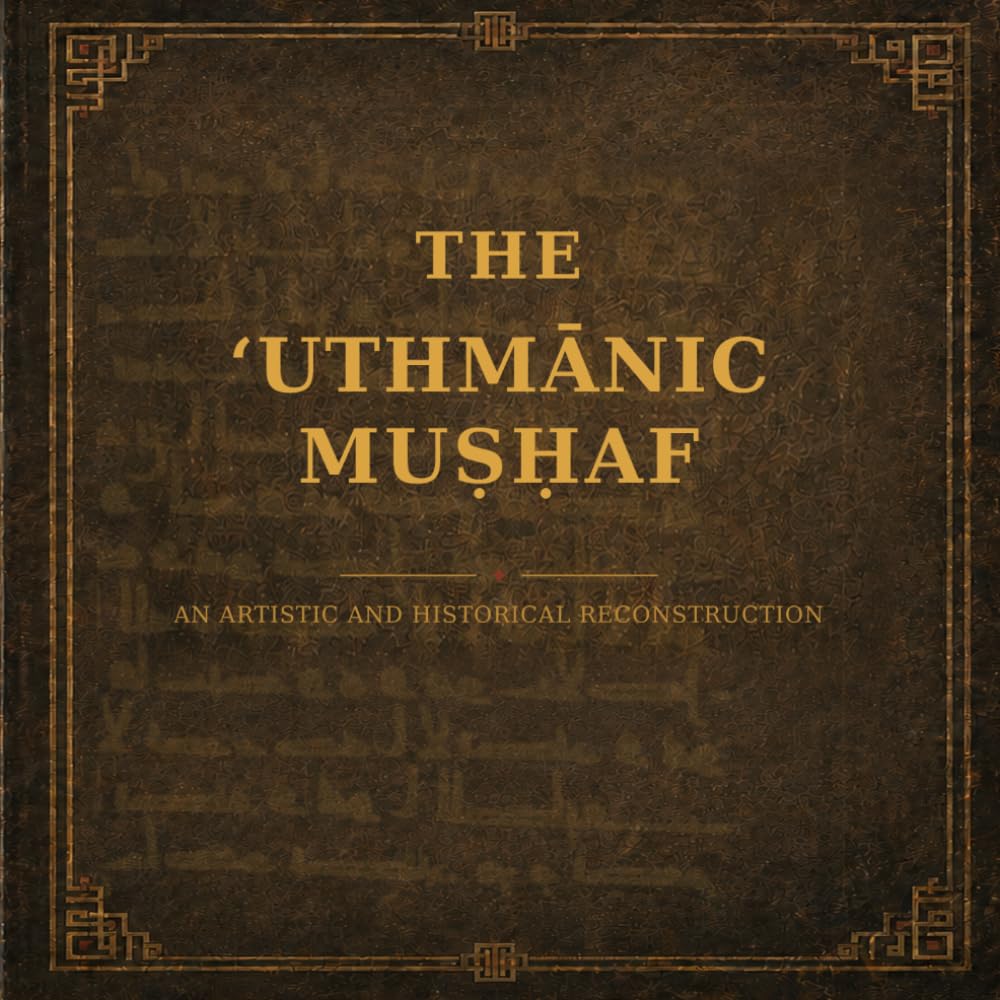
The ‘Uthmānic Muṣḥaf المصحف الشريف is a contemporary artistic, historical, and typographic reconstruction inspired by the visual world of the earliest monumental Qur’anic manuscripts.
Taking as its principal point of reference the celebrated muṣḥaf preserved in the Topkapı Palace Museum and traditionally attributed to Caliph ʿUthmān ibn ʿAffān, this edition seeks to evoke the austere beauty, measured rhythm, horizontal proportions, and contemplative presence of early Kufic Qur’anic writing. It is not a photographic facsimile and does not claim to reproduce any historical manuscript page by page. Rather, it offers a carefully researched modern reconstruction grounded in sustained manuscript study, textual verification, and original typographic design.
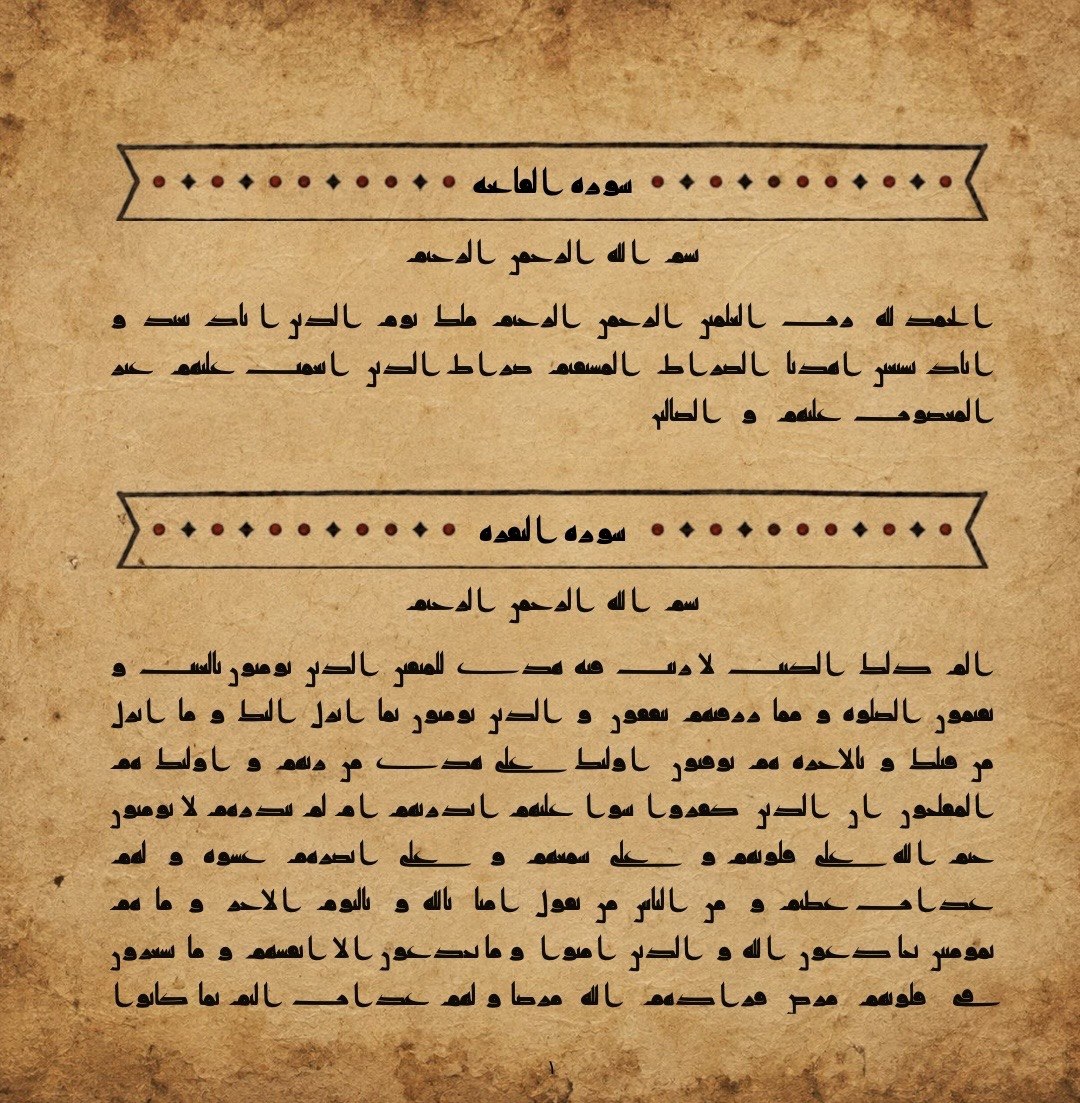
The Qur’anic text is presented in a restrained early Kufic manner, without the dots, vowel signs, verse numbers, recitation marks, and other reading aids familiar from modern printed muṣḥafs. Its distinctive script was composed using KufiLegacy, an original typeface created specifically for this project after extensive study of early Qur’anic calligraphy. The square page architecture, continuous textual flow, framed sūrah headings, parchment-toned surfaces, and absence of excessive ornament have been designed to preserve the visual silence and monumentality associated with the earliest Qur’anic book tradition.
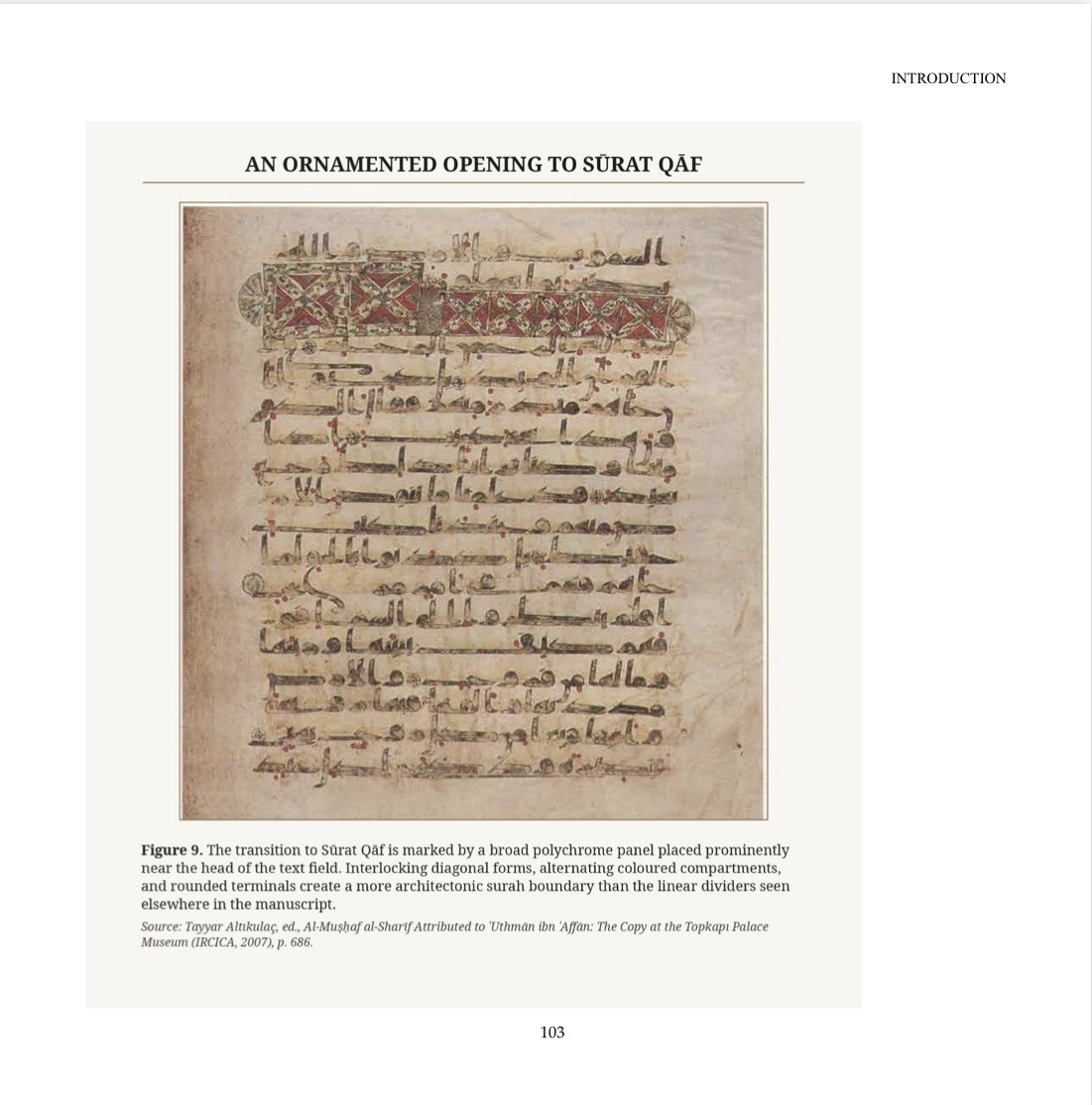
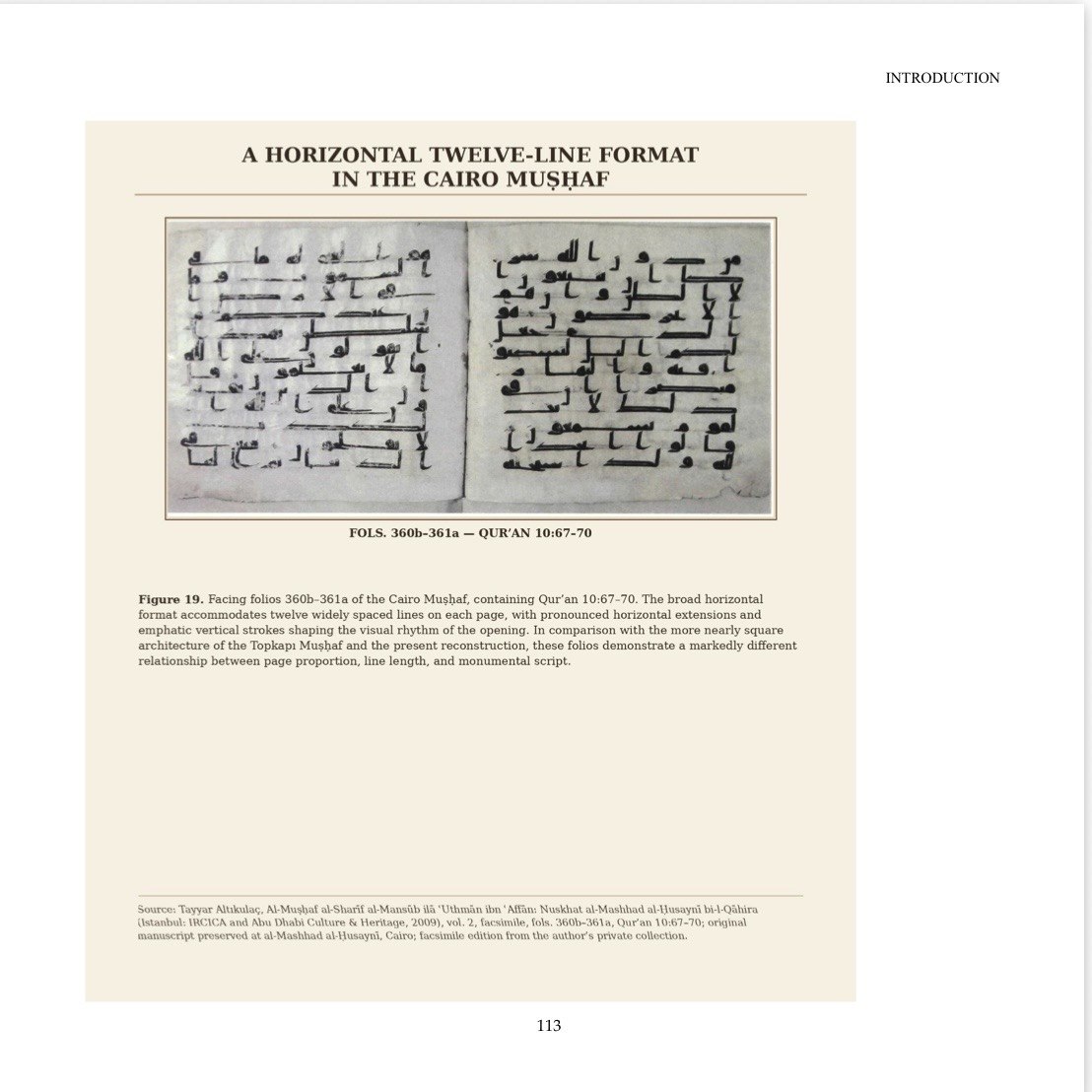
The volume is constructed to be approached from two directions. From the English side, readers enter through an extensive scholarly introduction explaining the historical background, methodology, textual preparation, creation of the KufiLegacy typeface, page architecture, digital process, limitations, and interpretive principles of the reconstruction. It also includes a comparative collection of carefully selected images from important early Qur’anic manuscripts preserved in Istanbul, Paris, London, Berlin, Tübingen, Cairo, Tashkent, Ṣanʿāʾ, Mashhad, and other collections.
From the Arabic side, the reader enters directly into المصحف الشريف and encounters the Qur’anic text within a visual environment inspired by the disciplined simplicity of early Kufic manuscripts.
This edition is intended for readers interested in the Qur’an, Islamic art, Arabic calligraphy, palaeography, manuscript studies, book history, typography, and the material heritage of the written word. Because the text deliberately omits modern vocalization and reading signs, it is not designed as an elementary reading or instructional Qur’an. Readers requiring full vocalization should consult it alongside a standard authorized muṣḥaf.
Created through several years of research, script development, textual preparation, and artistic labor, this work is offered as a bridge between the surviving memory of the earliest Qur’anic manuscripts and the possibilities of the contemporary printed book—a tribute to the scribes, reciters, custodians, and generations through whom the Qur’anic word has been transmitted.